Apparently, oil rigs can become quite fertile grounds for artificial reefs. The Washington Post featured an article on old oil rigs in the Gulf of Mexico, and how they are breeding grounds for tens of thousands of fish, as well as rare coral. The old oil rigs protrude up into the photic zone of the water, where photosynthetic organisms can thrive, and provide a solid substrate for them to attach to. They're even a target of interest for aquaculture.
Naturally, just because oil rigs have had a positive impact, it doesn't necessarily mean that wind farms will as well. For one, the Gulf of Mexico is a very different environment from the Pennsylvania coast where Bluewater Wind intends to place their turbines. In addition, Petersen and Malm pointed out that the shape and texture of the substrate makes a huge difference in the type of organism that can thrive. An oil rig, like one of these:
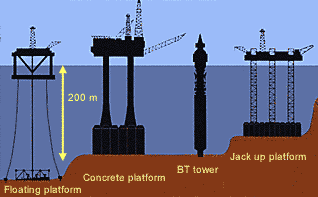
(from solarnavigator.net)
is going to have a very different impact than a wind turbine:

(from offshorewind.net)
In addition, effects will not be immediate: Petersen and Malm point out that it takes up to five years for a stable community to establish itself. Still, plenty of data has already been accumulated on existing artificial reefs. Perhaps, using that data, marine biologists could make some predictions on whether the wind turbines will have an ultimately beneficial or harmful effect.

No comments:
Post a Comment